Back to all projects



Working with Flowmatters has been a positive experience, and our collaboration is still ongoing.
We are pleased with the results delivered so far, mainly the development of our customer portal.
Is your company on track with
GenAI?
As Tiny Library, a leading Dutch baby & kids circular subscription brand, scaled its operations, their customer experience split across three separate platforms: Shopify for initial orders, Firmhouse on a separate subdomain for recurring subscriptions, and Returnless on a third external website for product returns. Because customers had to navigate three interfaces and three logins, more than 50% of all customer support tickets came from basic self-service actions that users couldn’t complete on their own.
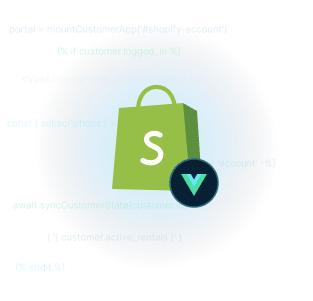
Instead of replacing backend tools that already worked well for the operations team, Flowmatters built a unified Vue.js customer portal embedded directly inside Shopify, backed by a custom Laravel middleware layer that synchronizes Shopify, Firmhouse, Returnless, and Picqer WMS in real time.
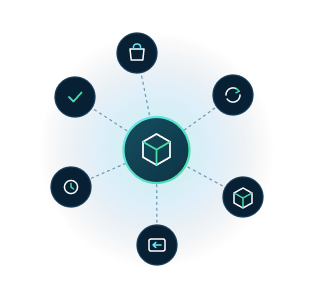
In short, we gave Tiny Library customers a single dashboard to manage their subscriptions, swaps, and returns in one place, while the internal operations team kept the backend tools they already relied on.
For a subscription business in the circular economy like Tiny Library, long-term retention depends on how easy it is for a parent to manage their active rental products, swap items as their child grows, and return items when they are done.
Tiny Library had chosen strong specialized tools for each part of its operations, but from the customer’s perspective, those tools didn’t talk to each other:
1. The storefront (Shopify):
Used for browsing the catalog and placing the initial order.
2. The subscription portal (Firmhouse):
Hosted on a separate subdomain with its own login and interface for managing recurring billing and active subscriptions.
3. The returns portal (Returnless):
A third external platform where users had to enter their order details again just to book a return.
First, support overhead skyrocketed. More than 50% of all incoming tickets had nothing to do with product defects or delivery issues. Customers were simply emailing support to pause a subscription, swap an item, or book a return because they couldn’t figure out where to log in.
Second, customer trust took a direct hit. Bouncing between three websites with different designs, URLs, and login credentials felt disjointed right at the moment when a customer wanted control over their recurring payments.
Behind the scenes, engineering and operations hit a wall. Because Shopify, Firmhouse, Returnless, and Picqer WMS operated as separate silos, getting a unified view of customer data or launching new features required slow, manual workarounds.
Ripping out Firmhouse, Returnless, or Picqer would have disrupted daily warehouse and billing operations for months. The right engineering move was keeping the backend systems that worked for the internal team while building a single, unified interface for the customer.
Custom Vue.js portal embedded directly in Shopify
Two-way Firmhouse subscription synchronization
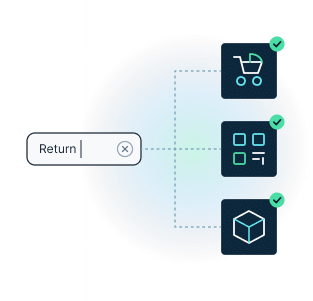
Headless returns flow via the Returnless API
Laravel middleware and Picqer WMS orchestration
1 Solution Architect
1 Senior Frontend Engineer (Vue.js / Shopify)
1 Senior Backend Engineer (Laravel)
1 UI/UX Designer
1 Quality Assurance Engineer
1 Project Manager
Initial portal launch followed by continuous product evolution based on real user feedback.
Shopify
Vuejs
Laravel
We are pleased with the results delivered so far, mainly the development of our customer portal.
We engineer scalable custom software, internal operational platforms, and automated data pipelines designed around how your business actually runs.