


 Back to all projects
Connecting a legacy ERP and warehouse to unlock European expansion
A market-leading distribution company was ready to expand into two new European markets, but its internal systems could not handle the operational volume. Their core business ran on a rigid legacy ERP that was isolated from their Warehouse Management System (WMS), their sales reps’ spreadsheets, and their B2B clients.
Instead of freezing the business for a risky multi-year ERP replacement, Flowmatters engineered a unified Laravel & Vue.js digital core around their existing infrastructure: connecting the legacy ERP and WMS in real time (with automated UIT pallet tracking), launching a 24/7 B2B self-service ordering portal, unifying client records in a custom commercial CRM, and automating supplier invoice entry with a Python AI/OCR module.
In short, we modernized their supply chain and ordering without stopping daily operations or replacing their core ERP.
The challenge: ready to scale, held back by disconnected systems
After securing a strong position in its domestic market, the company set a clear goal: expanding its distribution network into new European countries. However, every attempt to increase daily order volume exposed serious bottlenecks in how data moved across the company.
The root problem was not a lack of market demand, but a fragmented software setup where core systems operated in silos:
First, the legacy ERP operated in total isolation. The company’s core financial and inventory database had no real-time connection to daily warehouse activity or incoming sales orders.
Second, warehouse and pallet tracking relied on manual entry. Because the ERP and the Warehouse Management System (WMS) didn’t sync automatically, warehouse operators had to record stock movements and Unique Identifier Codes (UIT) by hand. Every shipment ran the risk of human error, delivery delays, or inventory mismatches.
On the commercial side, sales reps were trapped in spreadsheets. Account managers spent hours cross-referencing static stock exports, checking custom pricing tiers over phone calls, and manually creating sales orders.
In the back office, finance hit an invoice bottleneck. A flood of incoming supplier invoices had to be typed into the system line by line, creating payment delays and tying up staff as international shipping volumes climbed.
Replacing the core ERP from scratch in the middle of an international expansion would have meant months of operational disruption and retraining. The company needed a way to modernize and connect its operations without stopping the business.
Engineering strategy: building a unified digital core around existing infrastructure
Rather than ripping out the legacy ERP, Flowmatters designed a custom integration and application layer that connected every department around a single source of truth.
![]()
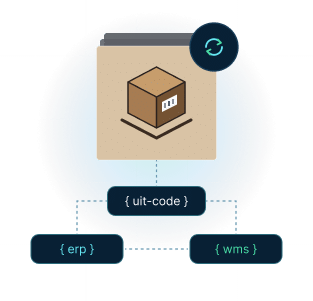
Real-time ERP & WMS synchronization with automated UIT codes
To eliminate the gap between the back office and the warehouse floor, we built a custom two-way integration bridge between the legacy ERP and the WMS. A critical part of this module was automating the generation and tracking of Unique Identifier Codes (UIT) for every pallet, giving the operations team accurate, real-time tracking from goods-in to final delivery.![]()
Unified commercial CRM for the sales team
We replaced scattered spreadsheets with a custom CRM module tailored to B2B distribution workflows. Every client profile now brings together live order history, custom contract pricing, communication logs, and support tickets in one view. Sales reps can see real-time warehouse stock and account status immediately, without calling the warehouse or checking multiple exports.![]()
24/7 B2B self-service portal with integrated payments
To remove manual order-taking for routine purchases, we built a modern Vue.js & Laravel B2B client portal. Key accounts can now log in at any time to view real-time inventory, see their negotiated B2B pricing tiers, place bulk orders, pay online through a secure payment integration, and track active shipments from the warehouse to their dock![]()
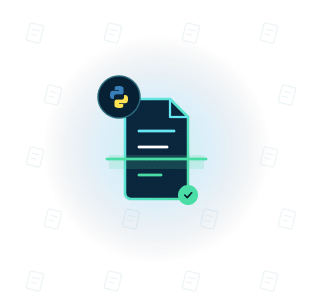
Automated supplier invoice processing (Python AI / OCR)
To remove the data-entry bottleneck in the finance department, we integrated a Python-based OCR and AI extraction module. Incoming supplier invoices are parsed automatically, structured into clean database records, and validated against purchase orders before syncing into the ERP.


1 Solution Architect
2 Senior Backend Engineers (Laravel / API Integration)
1 Senior Frontend Engineer (Vue.js)
1 Data & AI Engineer (Python OCR) 1 UI/UX Designer
1 Quality Assurance Engineer
1 Project Manager.
Phased rollout with zero operational downtime, followed by continuous feature expansion across new European markets.
-
![Python]()
Python
-
![laravel]()
Laravel
-
![]()
Vuej.s
-
![]()
PHP


Facing Similar Operational or Data Complexity?
We engineer scalable custom software, internal operational platforms, and automated data pipelines designed around how your business actually runs.
